Getting a Good Latch: Breastfeeding Positions & Holds That Help

Getting a Good Latch: Breastfeeding Positions & Holds That Help

April 15, 2026 Women
Getting a Good Latch: Breastfeeding Positions & Holds That Help

breastfeeding Getting a Good Latch and Breastfeeding Holds to Try

Getting a good latch is one of the most important parts of breastfeeding. A good latch helps your baby get milk easily and helps keep feeding comfortable for you. Since babies eat often, feeding should not hurt.

The way you hold and position your baby can make a big difference.

Flower top shape
Flower down shape

baby latch How to Help Your Baby Latch Well

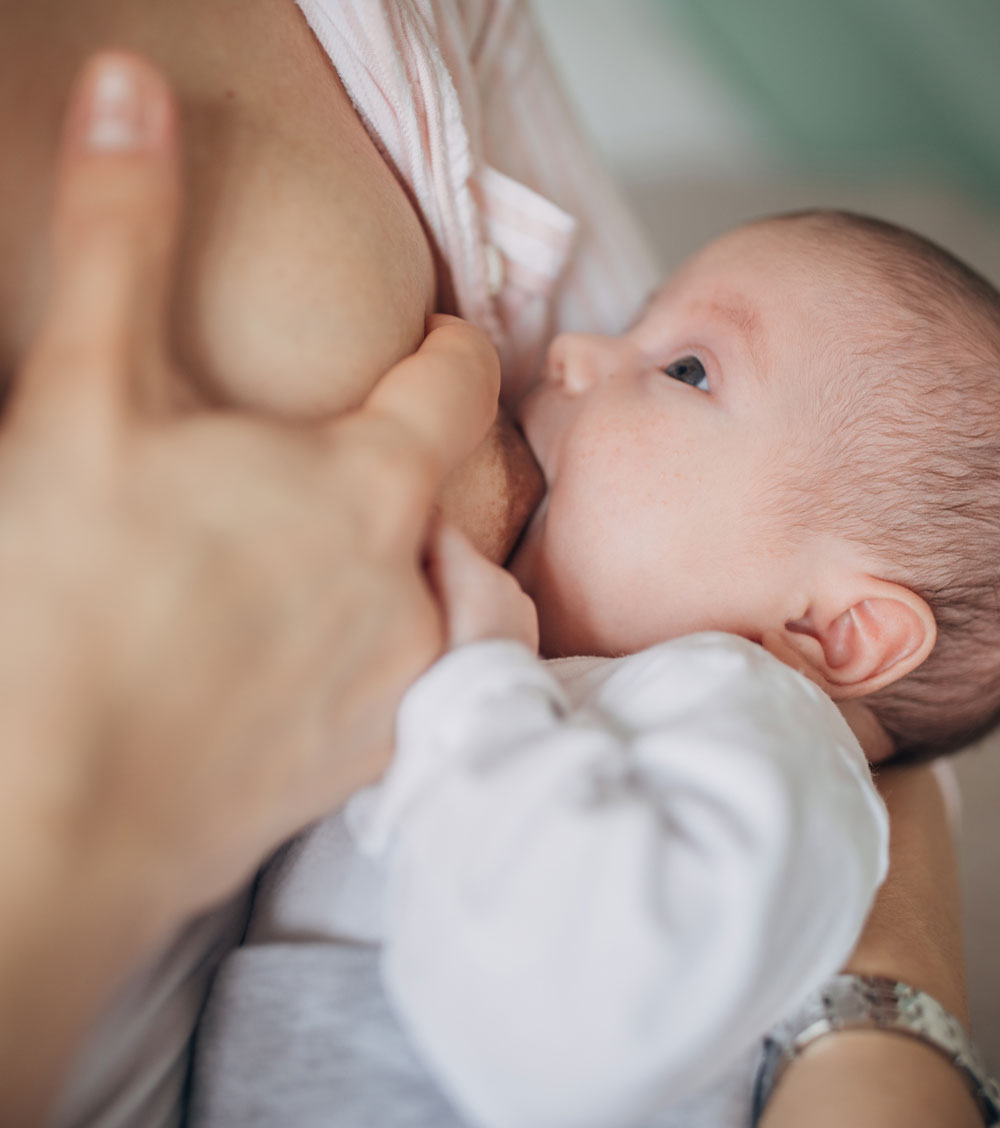
When bringing your baby to the breast, aim for a position that helps them open wide and latch deeply.

Here are some helpful tips:

1

Let your baby’s chin touch the breast first

2

Your baby’s head should be slightly tilted back

3

Point the nipple slightly upward, toward the roof of your baby’s mouth

This helps your baby open wide and take more of the breast into their mouth.

Woman breastfeeding her infant child

healthy baby Supporting Your Baby During Feeding

Use one arm to support your baby’s back. Place the palm of your hand at the base of their neck, not on the back of their head.

This position helps your baby stay comfortable and latch more easily.

MAKE SURE YOUR BABY IS:

baby List Breastfeeding Holds to Try

Different holds can work better at different times. You may find one feels best, or you may switch between them.

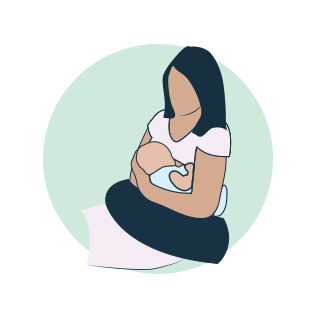
Cross-Cradle Hold

In this hold, your baby is held across your body, with your opposite arm supporting them. Many parents use this hold when working through latch discomfort.

This position can be helpful if:
Football Hold

In this hold, your baby is tucked along your side, next to the breast. This hold gives you good support and visibility while feeding.

This position can be helpful if:

Woman sitting in chair holding baby

notebook Signs of a Good Latch

With a good latch, you may notice:

These are signs your baby is getting enough milk.

Tip!

If the latch feels uncomfortable, gently break the latch and try again. It’s okay to try more than once.

healthy people When to Get Help

Breastfeeding should not hurt. Pain is a sign that something may need adjusting.

If you have latch pain, discomfort, or questions, reach out for support. Your local WIC office and breastfeeding support staff can help you troubleshoot and feel more confident.

You don’t have to push through pain and you don’t have to figure this out alone. Help is available.

REFERENCES:

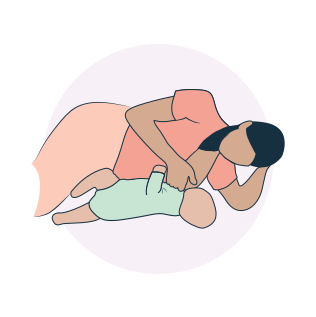
Side-Lying

Side-Lying Hold

  1. For the right breast, lie on your right side with your baby facing you.
  2. Pull your baby close. Your baby’s mouth should be level with your nipple.
  3. In this position, you can cradle your baby’s back with your left arm and support yourself with your right arm and/or pillows.
  4. Keep loose clothing and bedding away from your baby.
  5. Reverse for the left breast.

This hold is useful when:

cross-cradle

Cross-Cradle Hold

  1. For the right breast, use your left arm to hold your baby’s head at your right breast and baby’s body toward your left side. A pillow across your lap can help support your left arm.
  2. Gently place your left hand behind your baby’s ears and neck, with your thumb and index finger behind each ear and your palm between baby’s shoulder blades. Turn your baby’s body toward yours so your tummies are touching.
  3. Hold your breast as if you are squeezing a sandwich. To protect your back, avoid leaning down to your baby. Instead, bring your baby to you.
  4. As your baby’s mouth opens, push gently with your left palm on baby’s head to help them latch on. Make sure you keep your fingers out of the way.
  5. Reverse for the left breast.

This hold is useful when:

Football

Clutch or “Football” Hold

  1. For the right breast, hold your baby level, facing up, at your right side.
  2. Put your baby’s head near your right nipple and support their back and legs under your right arm.
  3. Hold the base of your baby’s head with your right palm. A pillow underneath your right arm can help support your baby’s weight.
  4. To protect your back, avoid leaning down to your baby. Bring baby to you instead.
  5. Reverse for the left breast.

This hold is useful when:

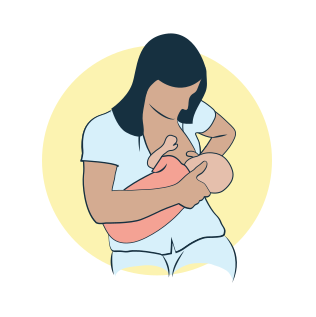
CRADLE hold

Cradle Hold

  1. For the right breast, cradle your baby with your right arm. Your baby will be on their left side across your lap, facing you at nipple level.
  2. Your baby’s head will rest on your right forearm with your baby’s back along your inner arm and palm.
  3. Turn your baby’s tummy toward your tummy. Your left hand is free to support your breast, if needed. Pillows can help support your arm and elbow.
  4. To protect your back, avoid leaning down to your baby. Instead, bring your baby to you.
  5. Reverse for the left breast.

This hold is useful when:

laid-back

Laid-Back Hold

  1. Lean back on a pillow with your baby’s tummy touching yours and their head at breast level. Some moms find that sitting up nearly straight works well. Others prefer to lean back and lie almost flat.
  2. You can place your baby’s cheek near your breast, or you may want to use one hand to hold your breast near your baby. It’s up to you and what you think feels best.
  3. Your baby will naturally find your nipple, latch, and begin to suckle.

This hold is useful when: