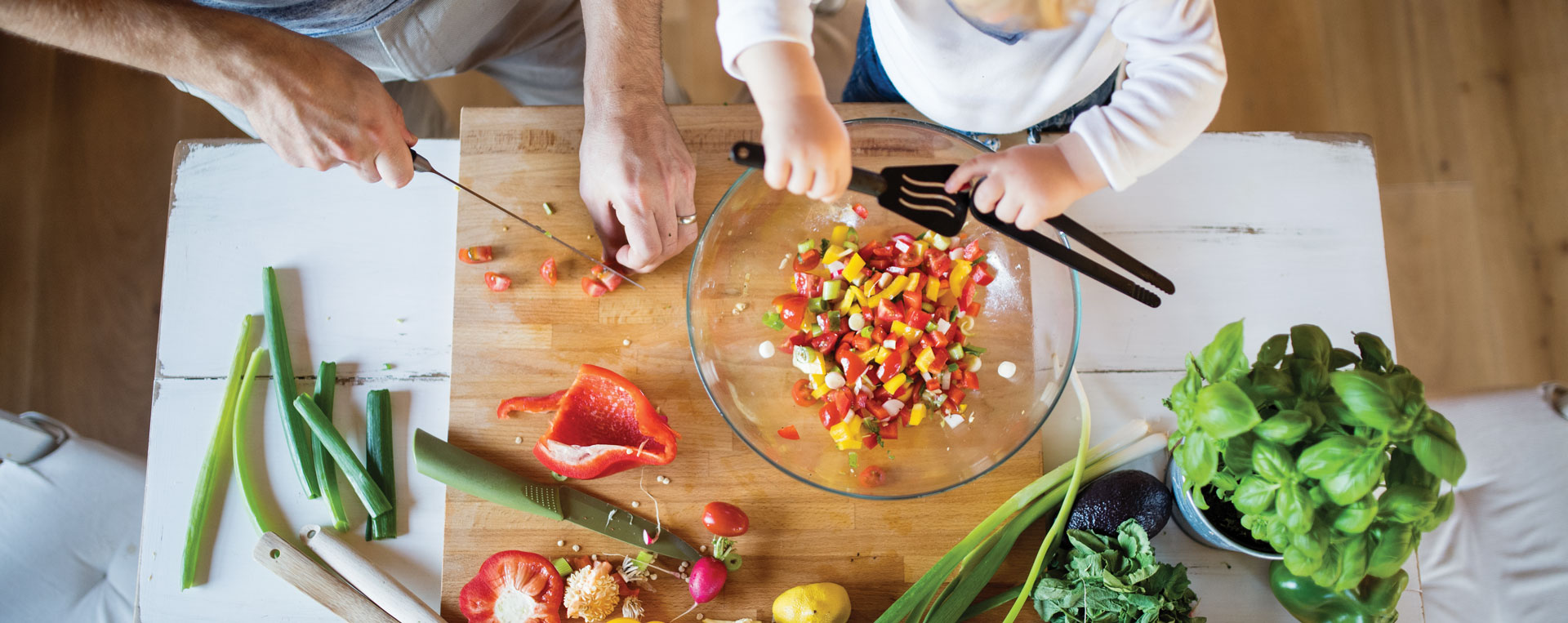
Father and child chopping vegetables for salad

Protecting Your Family from Cyclospora: Summer Food & Water Safety

September 2, 2026 General /Family

protect healthybaby How to Protect Your Family from Cyclospora

Food safety is always a hot topic in the summer; rising temperatures means more bacteria growth when food isn’t handled properly. And when the weather warms up, other tiny, unwelcome visitors also come to town: parasites.

Recently, a parasite called Cyclospora (sigh-clo-SPORE-uh) has been in the news due to outbreaks, possibly linked to fresh salad greens. Let’s look at what this tiny bug is, how it spreads, and the simple steps you can take to help keep you and your little ones safe.

question parasite What is a Parasite?

A parasite is a tiny living thing (a germ) that lives inside or on another living thing. Some parasites are big enough to see, like ticks or lice. Others, like Cyclospora, are so microscopic that you can’t see them at all.

Cyclospora gets into food or water through tiny, invisible amounts of feces (poop). If someone swallows it, it can cause a stomach illness called cyclosporiasis.

Bacteria magnified over fruits and vegetables
Woman with stomachache looking unwell on couch

healthy baby Signs of Cyclospora:

If you or your child swallows this parasite, you won’t get sick right away. It usually takes 2 days to 2 weeks for symptoms to start.

Symptoms may include:

From 2016 to 2019, Cyclospora infections increased 875% in the United States. In July of 2026, one outbreak caused 5,000 suspected infections in 34 states. 1 out of every 11 people with the illness have been hospitalized.

alert-white
Because this illness causes a lot of diarrhea, kids can get dehydrated quickly. If your child has these symptoms, call your pediatrician or healthcare provider right away.

people heart How to Protect Your Family

It can be hard to pinpoint exactly what causes cyclosporiasis outbreaks, because it can take up to 2 weeks after contact with the parasite before symptoms appear.

Here are a few things to know to help protect your family from getting sick.

Water Safety: Pools, Lakes, and Splash Pads
Many parents are surprised to learn that chlorine in swimming pools doesn’t easily kill Cyclospora. It can survive in pool water, water parks, and splash pads, as well as in natural lakes and streams.
To help keep your family safe around water:
Mother holding smiling baby in swimming pool
Kitchen Safety: Shopping and Food Prep

You don’t have to skip fresh summer fruits and veggies! You just need to handle them a little differently during an outbreak.

Here’s how:
Woman tossing fresh salad in wooden bowl
Tip!
Wash produce the right way: A quick rinse under the tap isn’t enough to wash away parasites, and while washing alone can’t 
fully eliminate Cyclospora, it’s still highly recommended to reduce your risk. 


bottle drink What’s Safe to Drink?

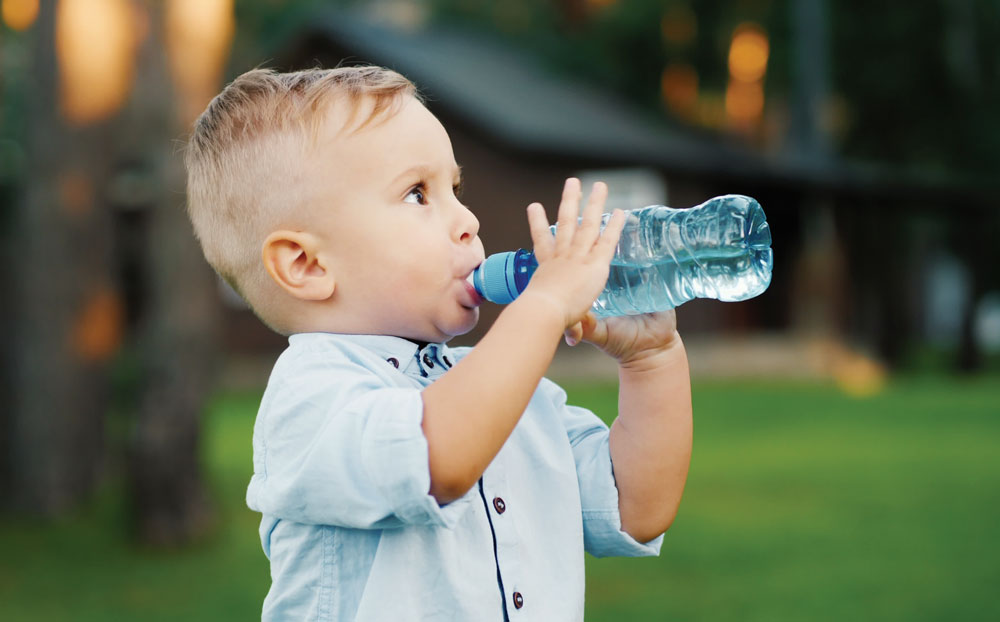
Young boy drinking water from bottle outdoors
If you have questions about water or food safety in your neighborhood, your local health department is the best, most reliable place to get the facts!
Remember!

REFERENCES:

Do you find this Blog helpful?

Show some love here!

Anonymous2 Days ago

This was really helpful and easy to understand. I wish I had found it during my first week of breastfeeding! 🤱💕

Anonymous2 Days ago

This was really helpful and easy to understand. I wish I had found it during my first week of breastfeeding! 🤱💕

Anonymous2 Days ago

As a first-time mom, I was feeling overwhelmed. The simple explanations made me feel much more confident. ❤️

Megan L.2 Days ago

This was really helpful and easy to understand. I wish I had found it during my first week of breastfeeding! 🤱💕

Anonymous2 Days ago

I didn’t realize that changing the feeding position could make such a big difference. The laid-back position worked really well for us. 😊

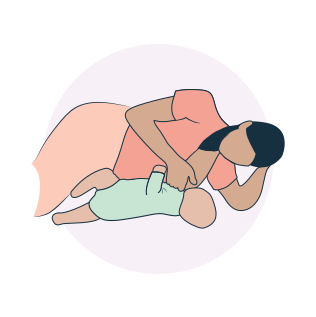
Side-Lying

Side-Lying Hold

  1. For the right breast, lie on your right side with your baby facing you.
  2. Pull your baby close. Your baby’s mouth should be level with your nipple.
  3. In this position, you can cradle your baby’s back with your left arm and support yourself with your right arm and/or pillows.
  4. Keep loose clothing and bedding away from your baby.
  5. Reverse for the left breast.

This hold is useful when:

cross-cradle

Cross-Cradle Hold

  1. For the right breast, use your left arm to hold your baby’s head at your right breast and baby’s body toward your left side. A pillow across your lap can help support your left arm.
  2. Gently place your left hand behind your baby’s ears and neck, with your thumb and index finger behind each ear and your palm between baby’s shoulder blades. Turn your baby’s body toward yours so your tummies are touching.
  3. Hold your breast as if you are squeezing a sandwich. To protect your back, avoid leaning down to your baby. Instead, bring your baby to you.
  4. As your baby’s mouth opens, push gently with your left palm on baby’s head to help them latch on. Make sure you keep your fingers out of the way.
  5. Reverse for the left breast.

This hold is useful when:

Football

Clutch or “Football” Hold

  1. For the right breast, hold your baby level, facing up, at your right side.
  2. Put your baby’s head near your right nipple and support their back and legs under your right arm.
  3. Hold the base of your baby’s head with your right palm. A pillow underneath your right arm can help support your baby’s weight.
  4. To protect your back, avoid leaning down to your baby. Bring baby to you instead.
  5. Reverse for the left breast.

This hold is useful when:

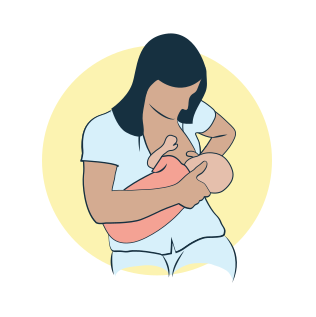
CRADLE hold

Cradle Hold

  1. For the right breast, cradle your baby with your right arm. Your baby will be on their left side across your lap, facing you at nipple level.
  2. Your baby’s head will rest on your right forearm with your baby’s back along your inner arm and palm.
  3. Turn your baby’s tummy toward your tummy. Your left hand is free to support your breast, if needed. Pillows can help support your arm and elbow.
  4. To protect your back, avoid leaning down to your baby. Instead, bring your baby to you.
  5. Reverse for the left breast.

This hold is useful when:

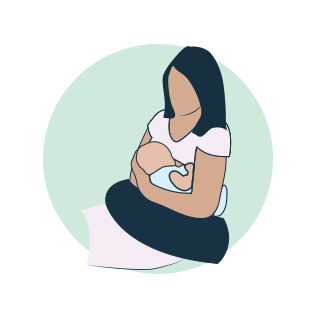
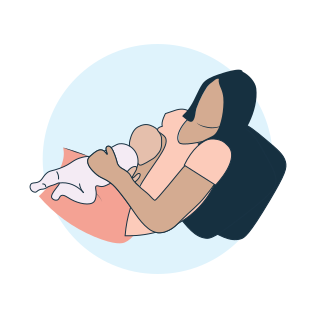
laid-back

Laid-Back Hold

  1. Lean back on a pillow with your baby’s tummy touching yours and their head at breast level. Some moms find that sitting up nearly straight works well. Others prefer to lean back and lie almost flat.
  2. You can place your baby’s cheek near your breast, or you may want to use one hand to hold your breast near your baby. It’s up to you and what you think feels best.
  3. Your baby will naturally find your nipple, latch, and begin to suckle.

This hold is useful when: